Reimagining post booking emails: Flight confirmation & E-Ticket redesign
Redesigned Air New Zealand's flight confirmation and e-ticket emails to improve clarity, mobile accessibility, and consistency across the post-booking journey. By auditing existing communications, mapping the customer journey, and introducing reusable components into the Unison design system, the project established a scalable foundation for customer-centric communications and improved self-service.
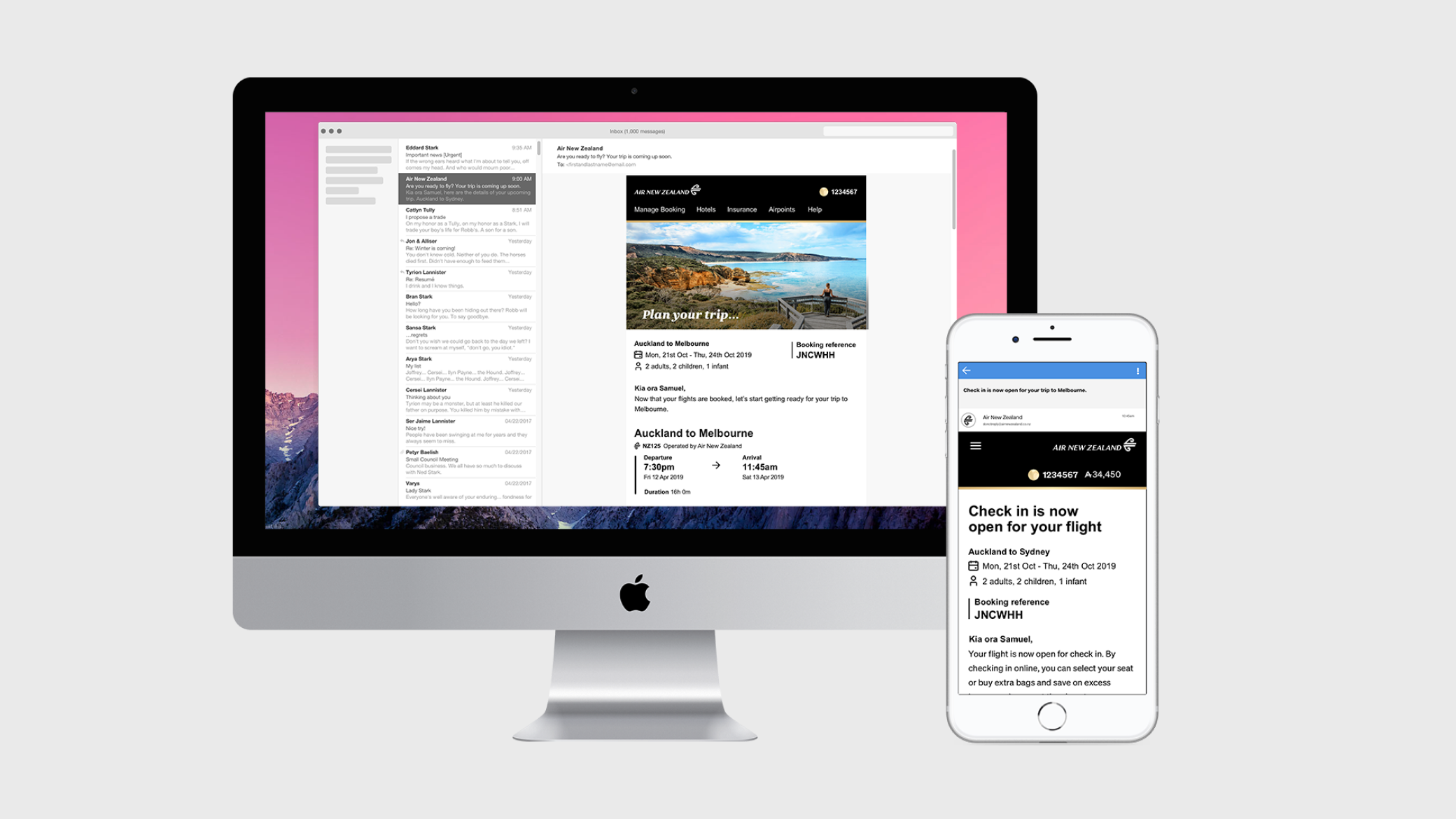
Context and constraints
Recent increase in flight disruptions highlighted a critical gap in how Air New Zealand approaches their emails.
A few constraints we had to work within.
About 45% of calls to Air New Zealand's contact centre were booking-related, many of which could be self-serviced. A surge in flight disruptions exposed weaknesses in post-booking communications, particularly the flight confirmation emails, a critical touchpoint for customers.
This work examining changes to an old mainframe technology solution, which required creating a case for a large-scale business investment and a broad cross-sectiofor a large scale cross-section of teams.
- Legacy booking systems
- Multiple airline partners
Problem
Emails serve as a key conduit for many users, especially overseas travellers who don't frequently fly.
Emails are one of the most common touchpoints for users once they have booked a flight. Customers will always receive these, and this was the main way information about their flights was conveyed.
- The flight confirmation (e-ticket) emails were extremely dated, and not mobile-friendly – an ever increasing touchpoint for customers on the go in an increasingly digital world.
- Emails were designed in siloes; inconsistent content, design and messaging across the post-booking journey.
- No holistic view of the customer journey; business priorities dominated over customer needs.
Key insights
Research and discovery pointed to a few clear themes.
Across all customer types, emails are always the main touchpoint that customers come back to.
— Key insight from research
My approach
Design a scalable email system, meeting user needs and incorporating it into the Unison Design System.
I worked closely with the Senior UX Strategist to reimagine post-booking emails.
- Auditing all current emails to understand content, purpose and frequency
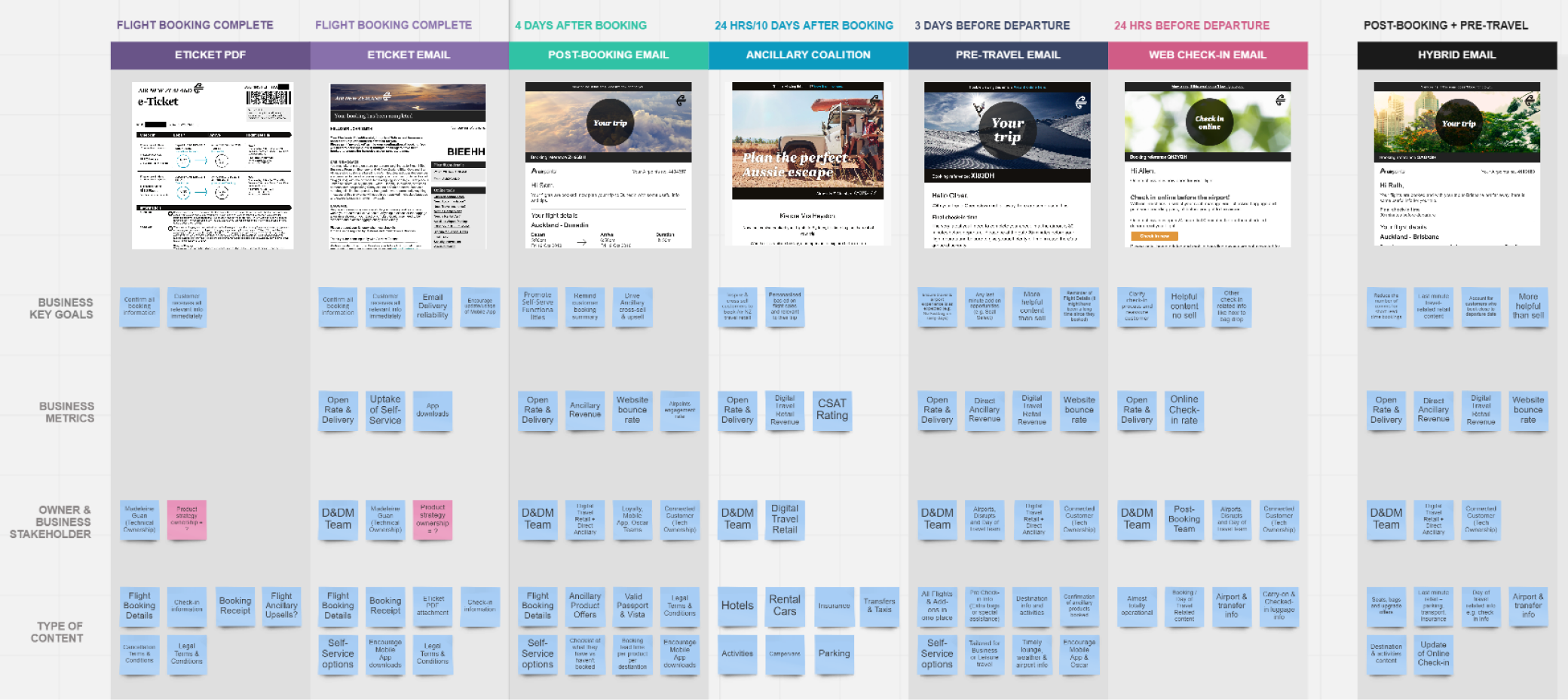
- Mapping the post-booking journey to identify gaps, redundancies and opportunities for customer-centric improvements
- Designing reusable email components and integrating them into Air New Zealand's Unison design system
- Facilitating stakeholder workshops to align on issues and future goals
- Creating conceptual email prototypes to guide development and ensure mobile responsiveness
My contribution was hands-on in content strategy, mapping and component design. My role hada direct influence on the final solution.
Design process
From current state to future state, then into design and build.
Current state analysis
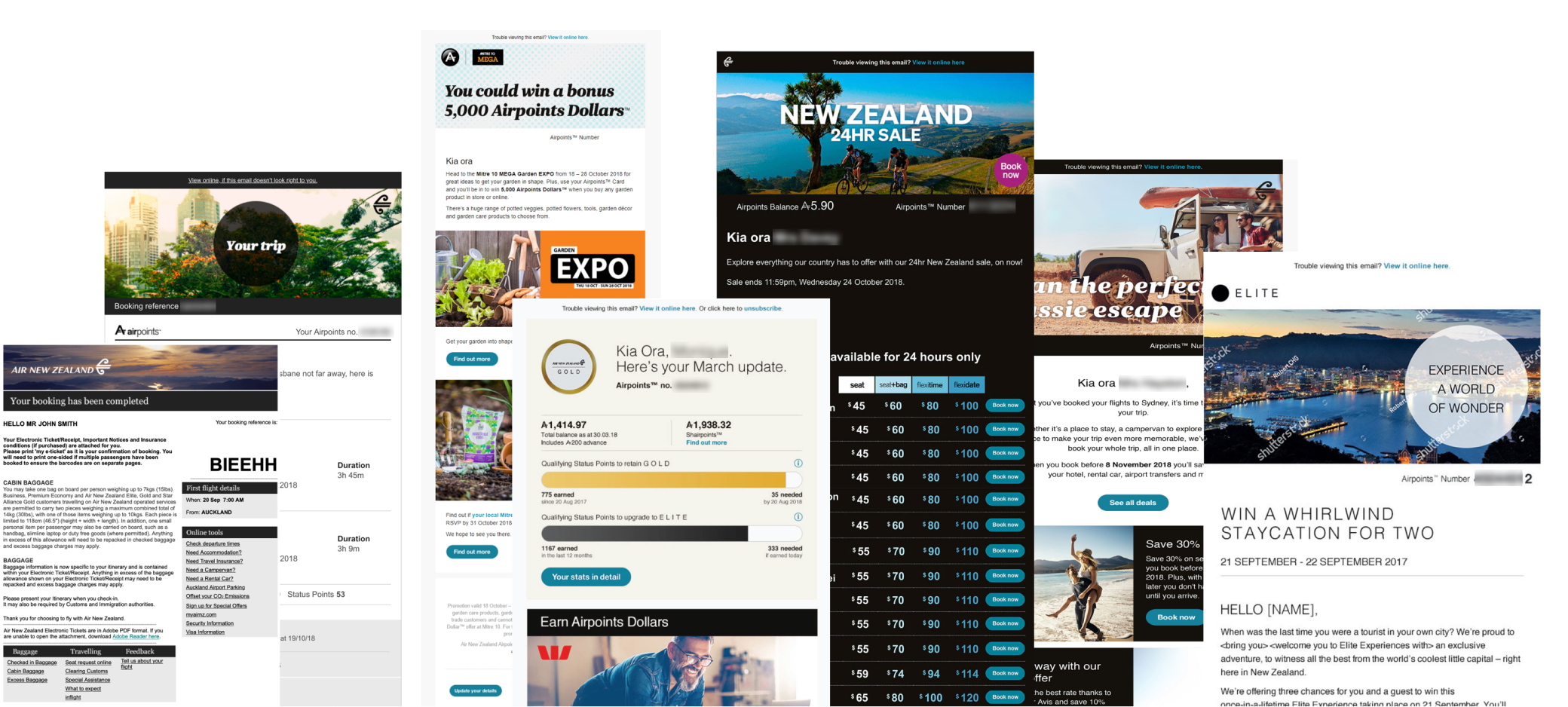
To first understand the problem, I collated all the information we currently had, by:
- Collecting and organising all emails Air New Zealand would send
- Categorising these emails into: Triggered communications (important flight information), Marketing and Loyalty.
- Identifying inconsistencies, redundancies and mobile limitations
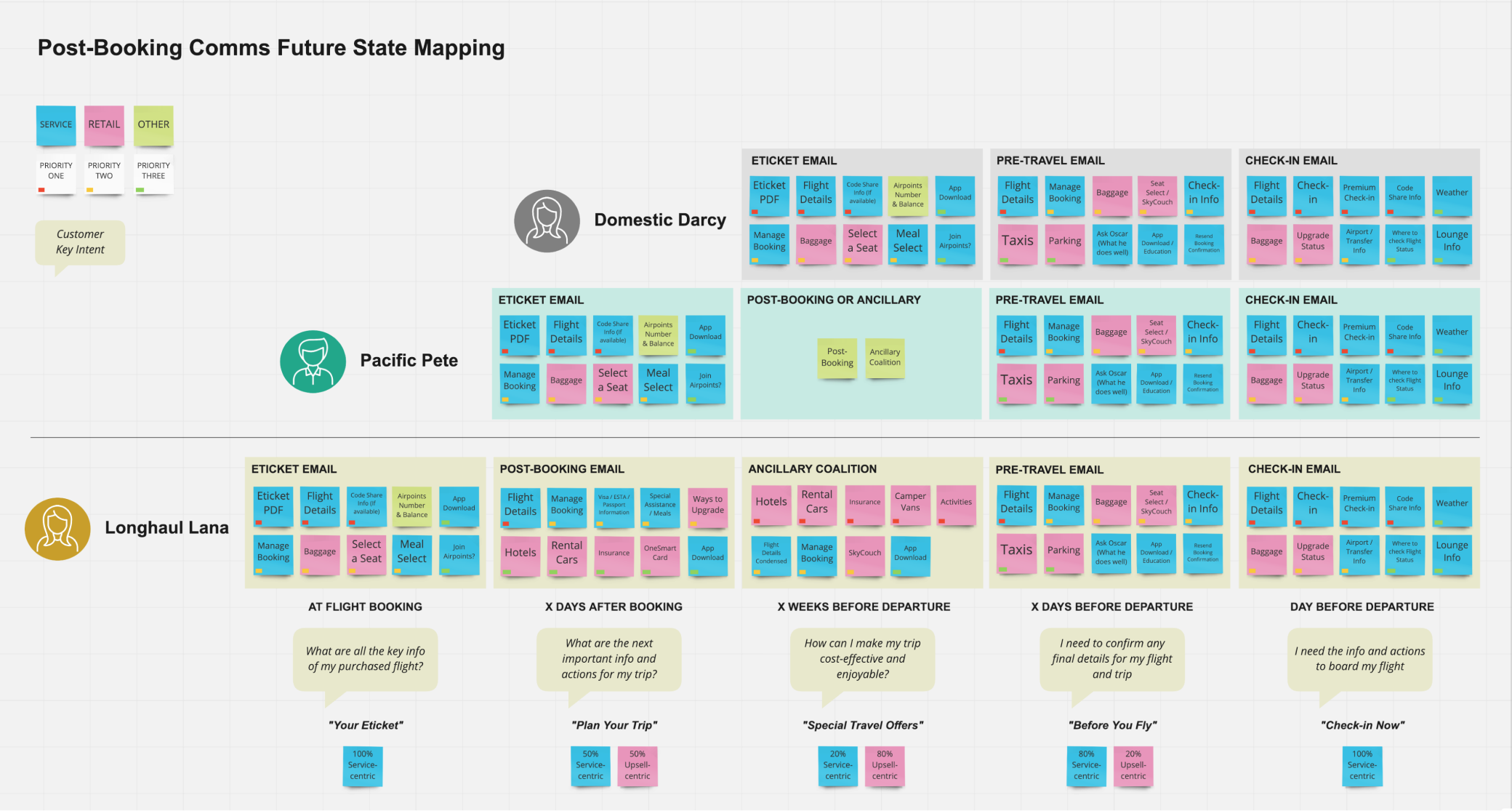
Future state planning
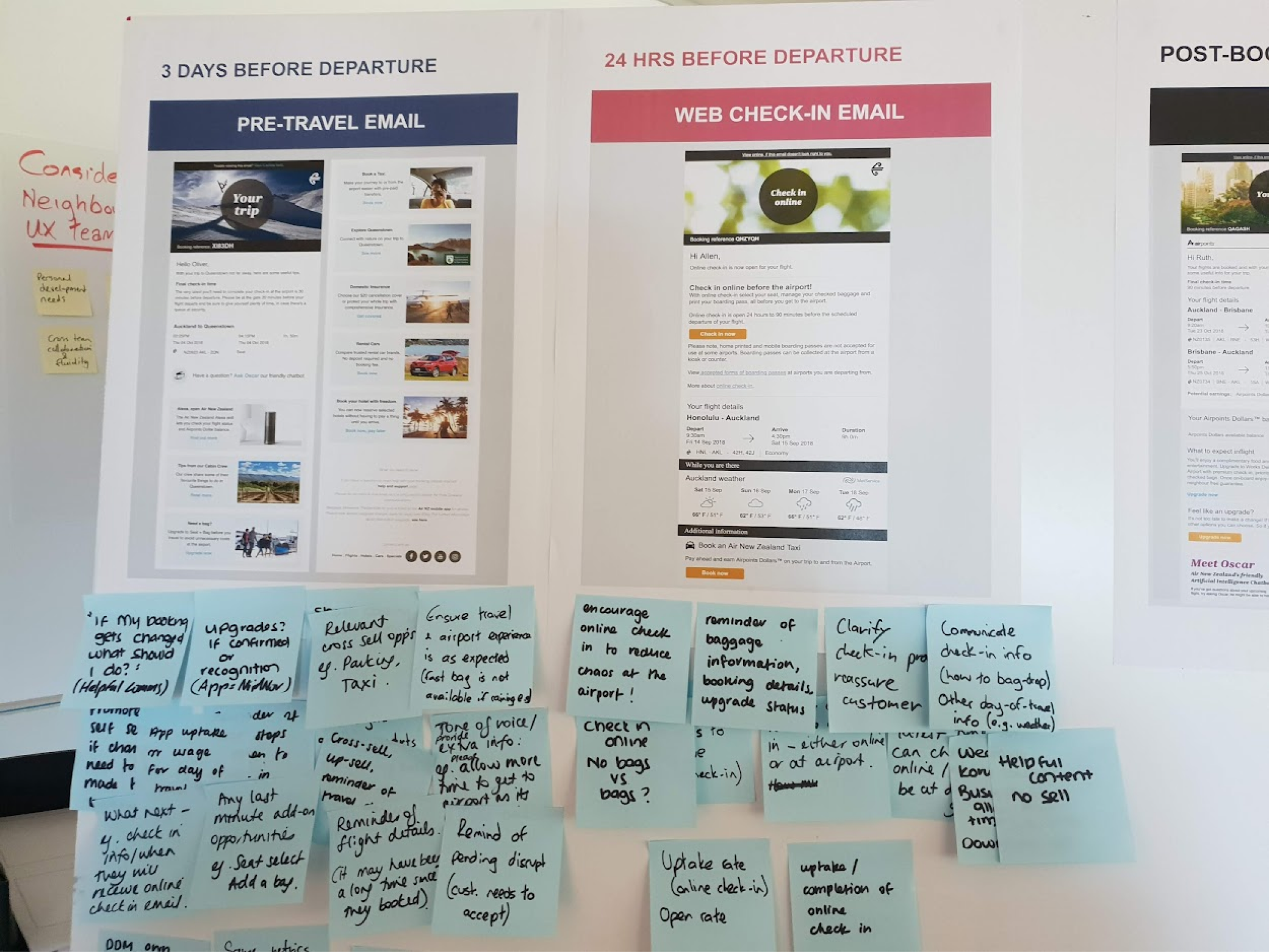
To define a consistent future state across all email communications, ensuring they share the same design language, I:
- Workshop with stakeholders
- User testing with customers
- Shift from business centric to customer centric emails
- Defined the E-ticket email as the "source of truth"
Design and prototyping
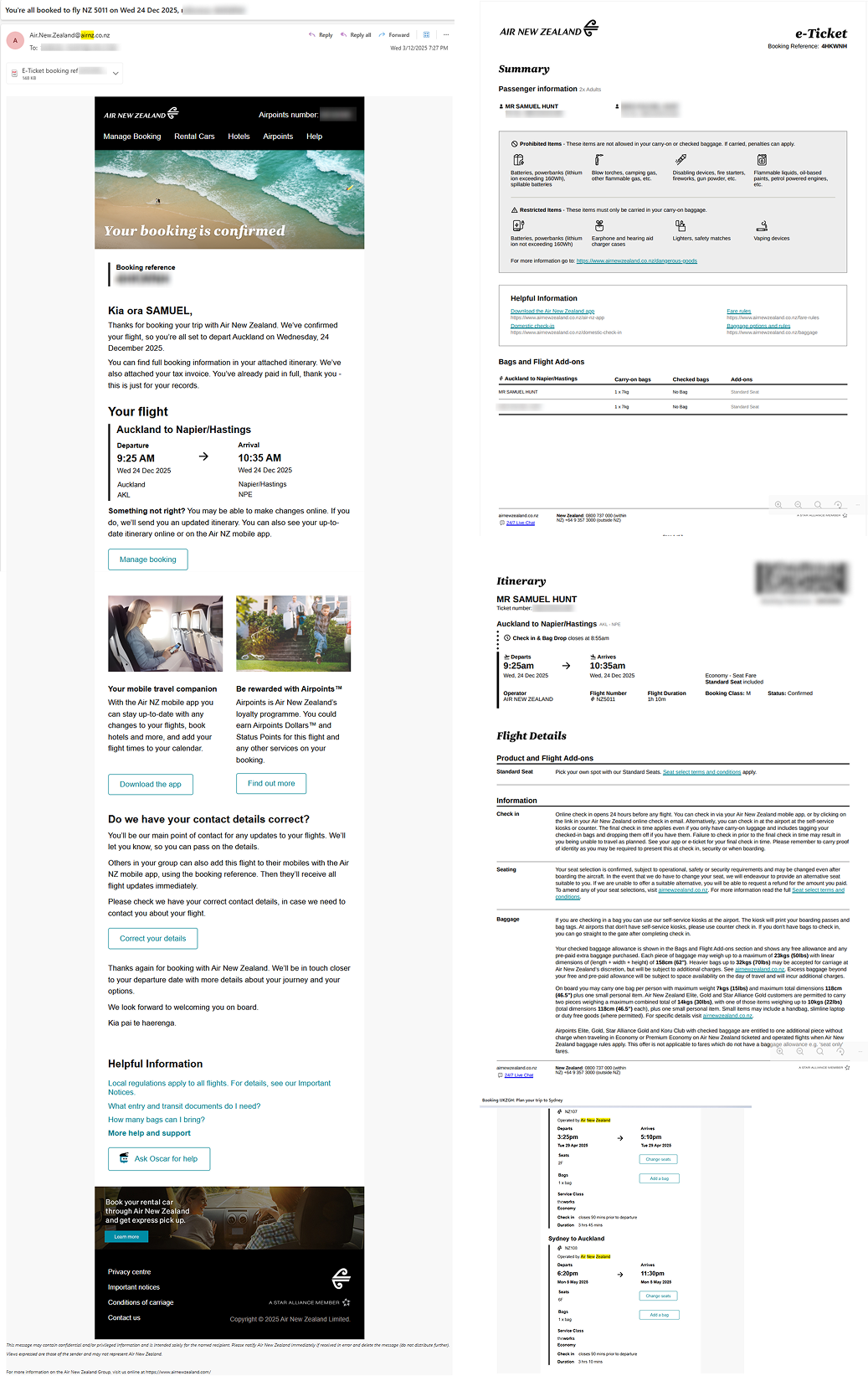
The largest impact item to be re-designed was the flight confirmation and e-ticket. I:
- Redesigned layout and hierarchy - clear, concise and actionable information
- Mobile friendly and accessible for a growing mobile audience
- Ticket design itself enhanced, working with core stakeholders, and testing, to enable clear email view for mobile, and a print view for the ticket itself.
- Created reusable components feeding into the Unison design system
Outcomes
- Standardised post-booking emails using reusable components
- Improved consistency in messaging and branding across emails
- Made it easy to see what sort of changes can be actioned directly within the email, improving self-service abilities
- Enabled faster production and reduced manual design work for new emails
- Laid the foundation for better customer-centric communication, supporting self-service and reducing contact centre volume
Reflections
This project reinforced the value of viewing communications through a customer-centric lens rather than purely business needs. Mapping the current-state journey and auditing content was crucial to creating reusable components and integrating with the design system - a practice I've carried into all subsequent design system and UX projects.
When working with so many different stakeholders with differing needs, getting everyone into the room, and facilitating a strong co-design workshop can really jump progress forwards much faster, and create alignment so much easier.